Reedbut Group has made a significant investment in green energy at its new Milton Keynes manufacturing site, partnering with Treco to install a high-efficiency biomass heating and integrated air-recirculation system. The move supports the company’s ambition to cut carbon emissions and improve factory-wide energy performance.
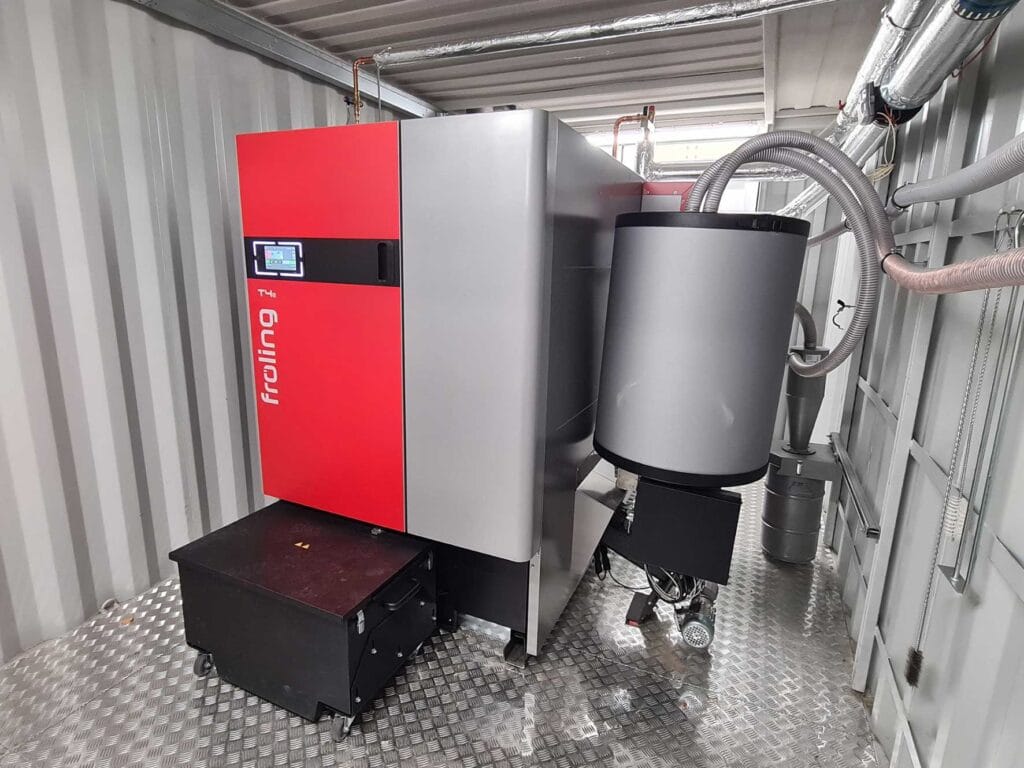
The new system centres on a fully automated Froling 300kW wood-pellet boiler, supported by a 12-tonne fuel silo and temperature-controlled thermal store. Maintaining the stored water at a constant temperature improves heat-transfer efficiency. Hot water flows into a heat-exchange unit, where large fans convert it into warm air circulated throughout the factory and warehouse.
“Sustainability sits at the heart of everything we do — not just in our products, but in how we power our business,” said Stuart Deaton, Group Customer Experience Director. “Switching to biomass and integrating it with smart recirculation systems cuts our carbon footprint and futureproofs our operations.”
Treco delivered the system from design and offsite construction through to installation, commissioning and staff training. The project incorporates award-winning engineering from Froling GmbH, recently recognised with the 2025 Plus X Award for Best Brand of the Year.
“Getting the warehouse operational in just a few months took a huge effort, and Treco played a key role,” said Keith Hadley, Project Manager at Treco. “The biomass boiler and VTS heater system now help Reedbut Group run more efficiently and sustainably.”
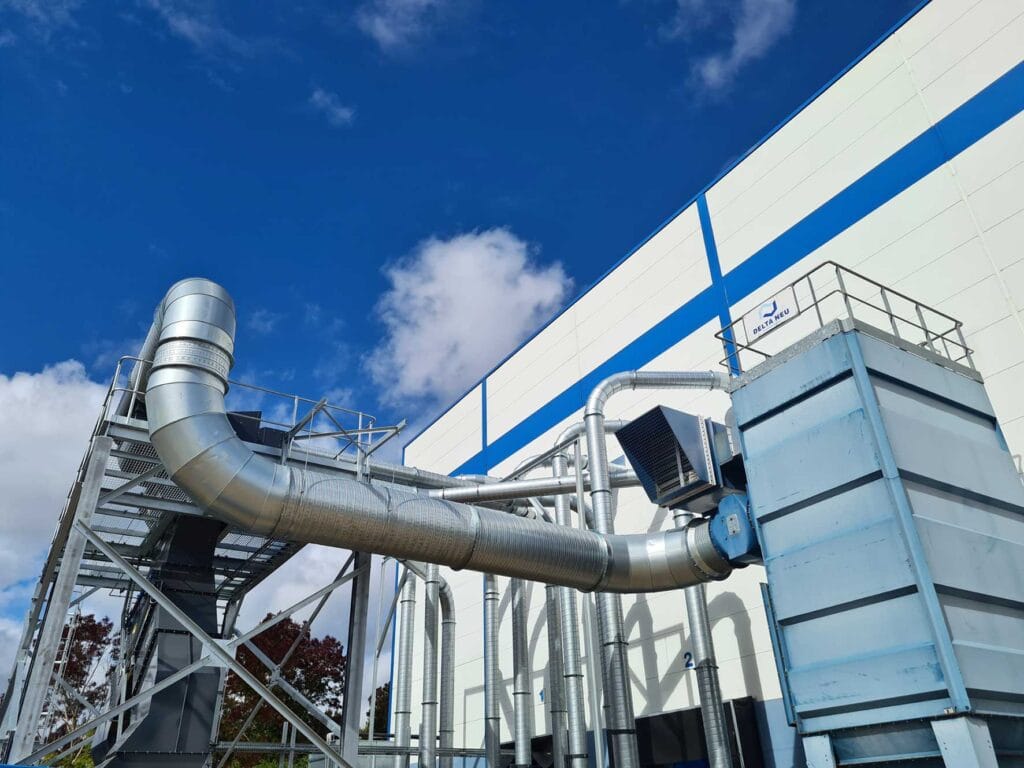
The facility also operates an intelligent network that boosts overall energy efficiency. Warm air generated by production machinery is extracted, cleaned through specialist air-filter towers and channelled back into the building. This works alongside a trim-extraction system supplied by Impact Air Systems. Recirculating the cleaned air helps maintain temperature and positive air pressure while reducing heat loss and improving air quality on the production floor.
Reedbut also manages waste more efficiently. A semi-automatic baler from Capital Compactors compresses offcuts into half-tonne bales, which FuturFirst collects and recycles. This process supports a circular manufacturing approach by reducing waste and improving material recovery.
Thanks to its integrated approach — biomass heating, air recirculation and streamlined waste handling — the new site uses less than 10% of the energy typically required for a factory of its size. The system saves an estimated 150,000kWh annually and offsets the equivalent CO₂ emissions of up to seven cars each year.
Reedbut Group’s investment shows how local manufacturers can accelerate progress towards the UK’s Net Zero goals while improving operational resilience and energy performance.