#LoveMK Day returns as businesses urged to help drive footfall ahead of the summer season
Milton Keynes is doubling down on civic pride as a driver of economic growth, with Destination Milton Keynes (DMK) calling on businesses to help promote the city ahead of the peak summer period.
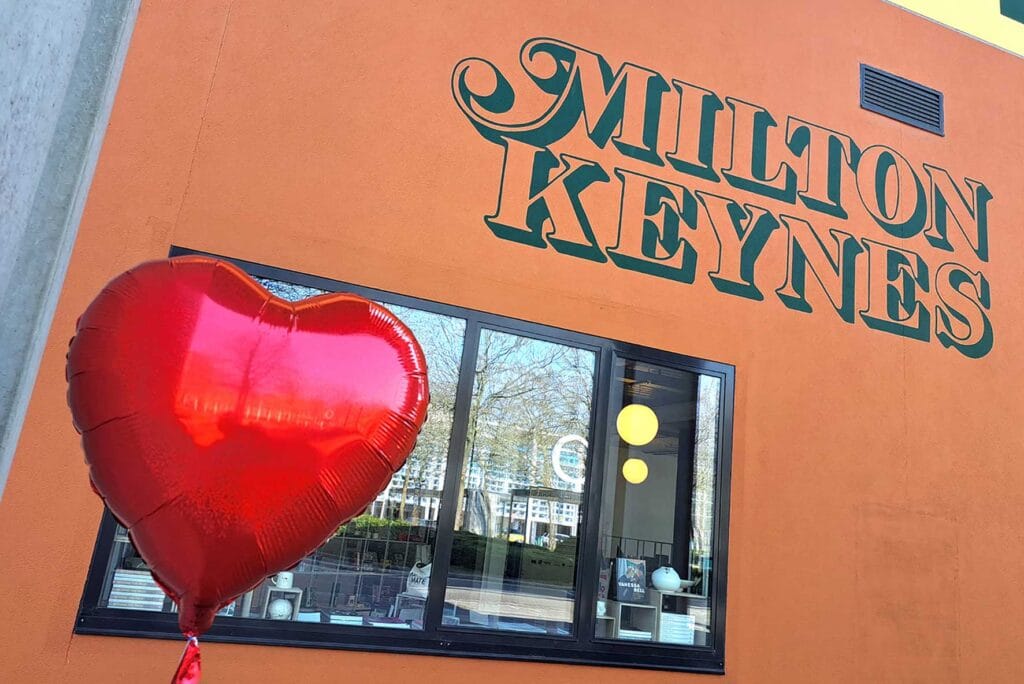
Its annual #LoveMK Day, now in its 14th year, has evolved into a coordinated social media campaign designed to raise the profile of the city — not just as a place to visit, but as a destination that supports a thriving local economy.
For sectors such as hospitality, retail and leisure, the timing is deliberate. Late April marks the start of a critical trading window, as warmer weather and a packed events calendar begin to draw visitors into the area.
Carys Underwood, marketing manager at Destination Milton Keynes, said the campaign is as much about economic impact as it is about community engagement, adding: “#LoveMK Day is a reason for everyone to celebrate what they love about this amazing place, but we also want to help visitors and locals discover some maybe less well-known ideas for things to do, places to visit or activities to try.”
She explained that encouraging people to share their own recommendations helps surface lesser-known venues and experiences, extending visitor spend beyond the city’s established hotspots.
That user-generated approach has become central to the campaign’s success. Rather than relying solely on traditional marketing, DMK is effectively crowdsourcing the city’s promotional message — with local businesses, residents and visitors all contributing to a wider narrative about what Milton Keynes has to offer.
“We want to hear those useful recommendations for anyone visiting, staying over or maybe who just wants to get out and explore their own local area,” Underwood said, reinforcing the campaign’s focus on practical, experience-led promotion.
The strategy reflects a broader shift in place marketing, where authenticity and peer recommendation increasingly outperform polished advertising. For independent businesses in particular, the exposure can be significant, especially when tied to seasonal demand.
Examples promoted this year range from independent restaurants and coffee shops to cultural attractions and green spaces — all of which play a role in shaping how long visitors stay, and how much they spend.
Events also form part of the wider economic picture. From the Midsummer Festival to major live music performances at the National Bowl, Milton Keynes is positioning itself to capture both day visitors and overnight stays, with knock-on benefits for accommodation providers and the wider supply chain.
For DMK, the objective is clear: convert digital engagement into physical footfall.
On 30 April, businesses are being encouraged to take part by sharing content, running promotions or simply joining the conversation online. The organisation will also host a series of competitions throughout the day to sustain engagement and extend reach.
Behind the campaign sits a broader ambition — to ensure Milton Keynes remains competitive as both a leisure and business destination in an increasingly crowded regional market.
As Underwood put it, the aim is to help more people “discover some maybe less well-known ideas” — a simple proposition with clear commercial implications for the city’s business community.