Innovation often hides in plain sight
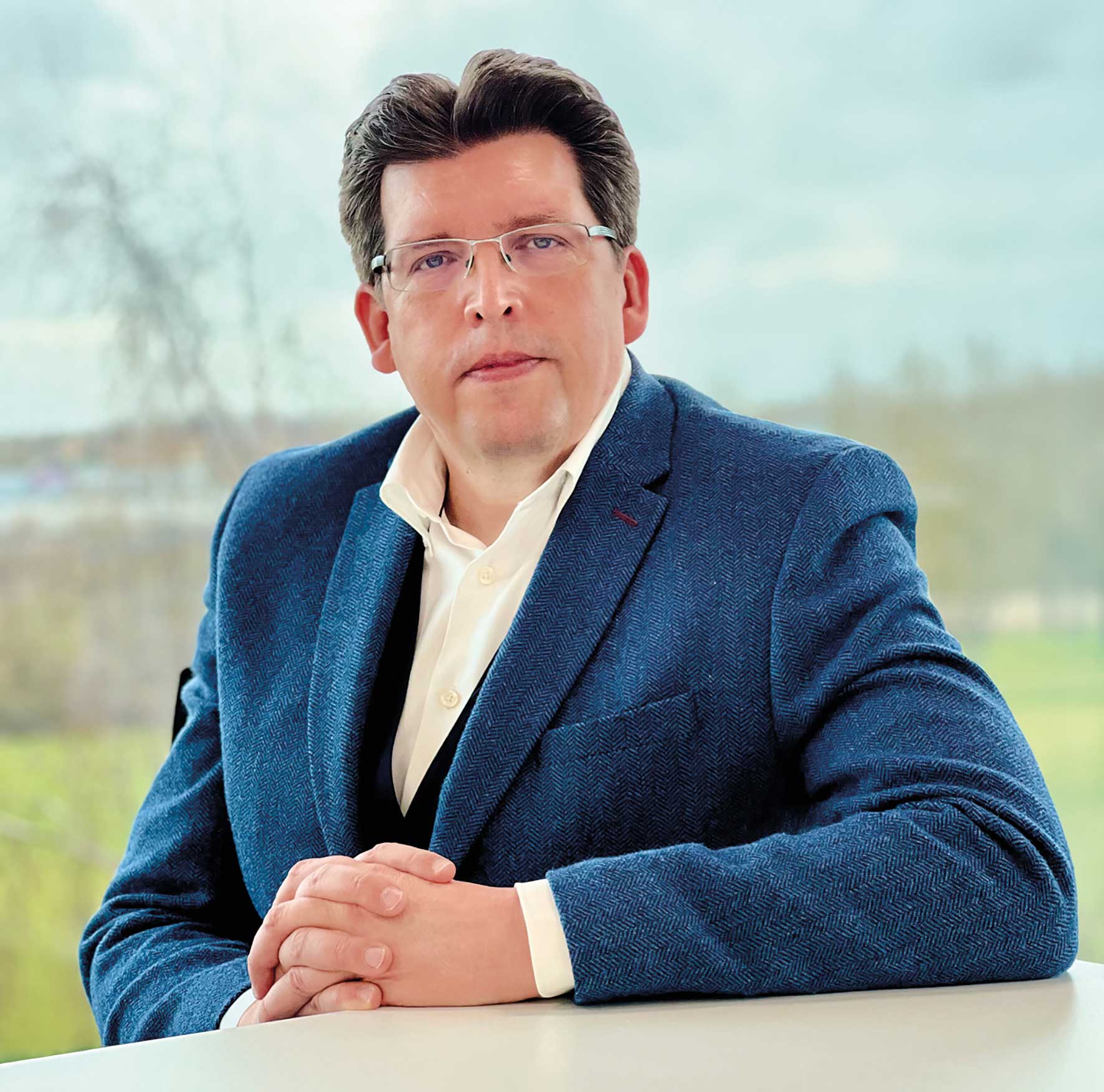
By Felix Medd – Head of R&D, TC Group
When people talk about innovation, the conversation often jumps straight to ‘cutting-edge technology’ and ‘breakthroughs’…
But when it comes to tax, particularly R&D tax relief, innovation can look very different.
It’s not always flashy.
It’s not always jaw-dropping.
It’s not always labelled as ‘innovation’.
In fact, it often hides in plain sight, embedded into the everyday problem-solving, product development, system improvements, and technical work that businesses see simply describe as: it’s just what we do.
Understanding that distinction’s becoming increasingly important. And Milton Keynes (MK) — one of the UK’s fastest‑growing cities and a dynamic centre for digital innovation — offers a useful lens through which to view it.
A city where innovation’s practical, not purely theoretical
MK’s one of the UK’s fastest‑growing cities, with more than 300,000 residents and an economy valued at over £16bn. Home to more than 2,400 technology businesses generating around £3.4bn annually, it’s become a genuine hub for digital innovation and experimentation1.
But what truly sets MK apart isn’t the scale of innovation. It’s the way innovation’s applied.
The city operates as a real‑world testing environment, where ideas move quickly from theory into practice. Technology’s developed, adapted and deployed in live settings, shaped by operational constraints, regulatory considerations, and commercial realities.
And this matters, because this is exactly where innovation, for tax purposes, tends to sit.
Research & Development doesn’t have to be revolutionary
One of the most common misconceptions around R&D tax relief is that innovation must be groundbreaking or unique on a global scale.
Mind-blowing.
Unbelievable.
Out of this world.
In reality, HMRC’s definition’s far more grounded.
Innovation, in this context, is about ‘resolving scientific or technological uncertainty’, where a competent professional cannot readily achieve the desired outcome using existing knowledge or solutions. And that uncertainty can exist even if the end product looks familiar or incremental.
At TC Group, through conversation with our clients, we increasingly see this play out through:
- The transition from pilot projects to commercially viable, scalable solutions
- Software or systems being adapted to work in new or complex environments
- Data, infrastructure or integration challenges that don’t have off‑the‑shelf answers
To a technical team, this often feels like operational problem‑solving.
To a tax professional, it can represent qualifying R&D.
Innovation’s rarely confined to a single innovation project. Instead, it’s woven through how technology businesses build, test, improve and scale, particularly in high‑growth, fast‑moving sectors.
Why innovation’s often missed for R&D purposes
Despite this, many businesses fail to recognise innovation within their own operations. Not because it isn’t happening, but because it doesn’t match the stereotype.
R&D frequently takes place:
- Within business‑as‑usual activity
- Across multiple iterative improvements rather than one defined project
- As a response to a specific client, regulatory or operating environment
- In code, systems or processes that are never externally marketed as “innovative”
When innovation’s treated as incidental rather than intentional, it’s often poorly documented. Without clear records of uncertainty, experimentation and outcomes, qualifying R&D can be missed entirely.
And that’s a missed opportunity.
This becomes even more relevant as HMRC scrutiny increases and claims are expected to demonstrate clearer links between technical challenges, development activity, and expenditure.
So, if you’re a tech business leader in MK, what should you be asking now?
For founders and leadership teams, the question isn’t simply “Can we class ourselves as innovative?”
It’s “Are we recognising and evidencing innovation properly?”
That means stepping back and asking four key questions:
- Are we solving technological problems that can’t easily be resolved with existing knowledge?
- Where does uncertainty exist in our development process?
- Are we capturing why certain approaches were tried, adapted, or abandoned?
- Are we being proactive enough when it comes to funding, Intellectual Property (IP) ownership, governance, and compliance?
Innovation that isn’t structured or thoroughly documented tends to create value only once. Innovation that’s properly understood can create value repeatedly — through funding, tax relief, and commercial planning.
Real‑world innovation meets commercial value
At TC Group, we work with many Milton Keynes based tech and media businesses where innovation’s practical, applied, and ongoing.
Rather than focusing solely on what sounds innovative and looks flashy, we help businesses identify what genuinely qualifies and ensure it’s structured, evidenced, and aligned with wider commercial goals.
This includes:
- Translating real‑world technical problem‑solving into robust R&D tax claims
- Helping businesses structure innovation so it’s fundable, compliant, and growth‑ready
- Supporting financial and commercial planning as companies move beyond pilot phases and prepare to scale
- Ensuring innovation activity links clearly to expenditure, technical effort, and risk
The most successful businesses we see don’t pause operations to “do R&D”. They build it into how they develop, adapt and respond to challenges, often without initially realising its true value.
Innovation, recognised differently
Milton Keynes’ business ecosystem shows us that innovation doesn’t need to look futuristic to matter.
Often, it’s happening quietly. In the everyday. In algorithms refined to meet operational constraints. In systems adapted for new environments. In processes redesigned to handle complexity.
For many tech businesses, that innovation’s already there staring back at you. The challenge is recognising it, capturing it, and using it strategically, to your advantage.
If you’re building technology that solves real‑world problems — especially in a city designed to test and trial new ideas at scale — innovation may be closer to home than you think.
And when it’s recognised properly, it can deliver more than just progress. It can deliver long‑term commercial value too.
If you’re solving real‑world technical problems, innovation may already be part of your day‑to‑day (even if you don’t call it that). The question is whether you’re capturing it properly, and making it work just as hard for your business as you do. That’s where the right support makes all the difference.
Get in touch https://www.tc-group.com/services/business-services/innovation-tax-reliefs/ or email Felix.
SOURCES:
1 https://www.milton-keynes.gov.uk/business/digital-technology-and-innovation