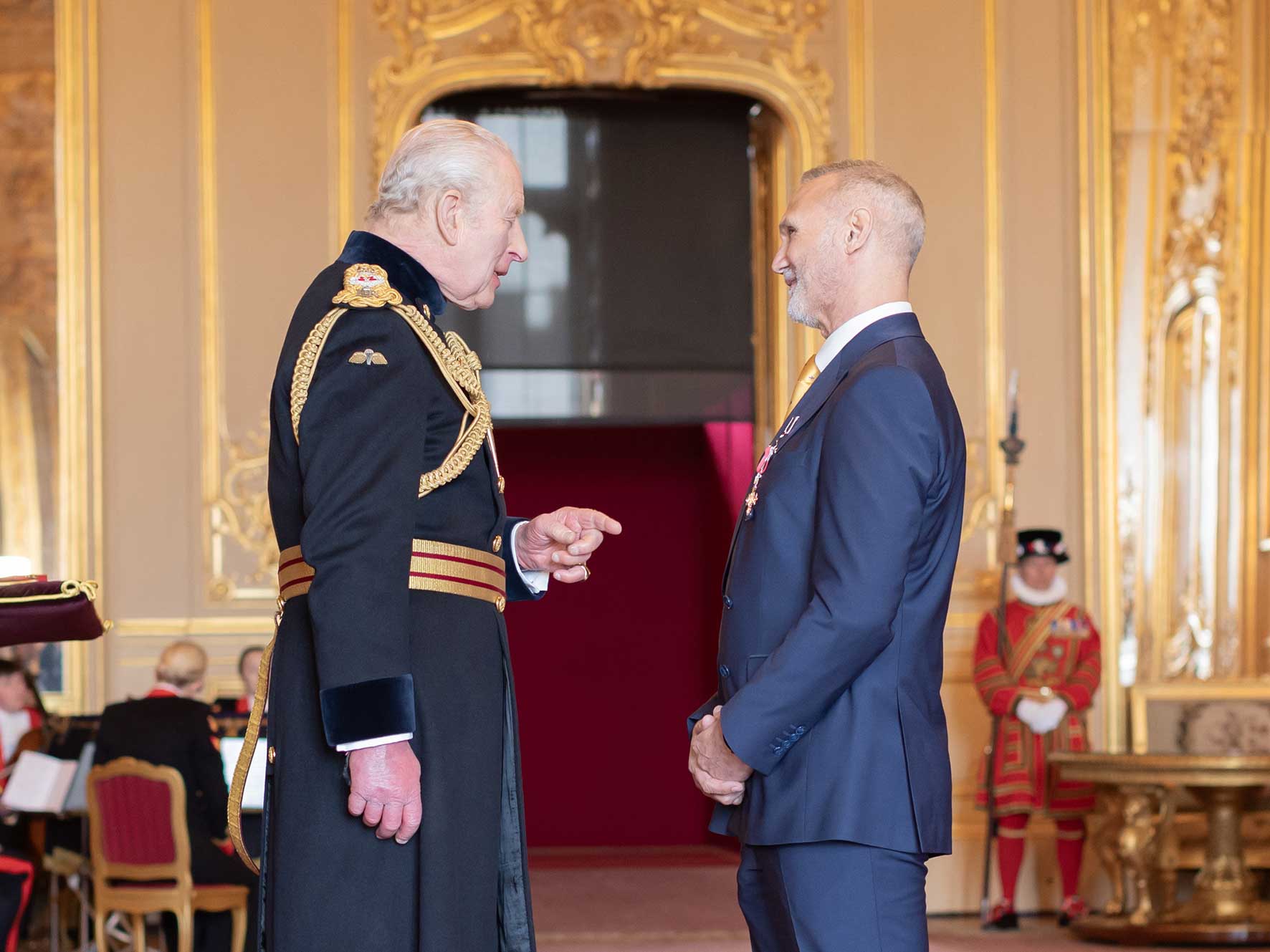
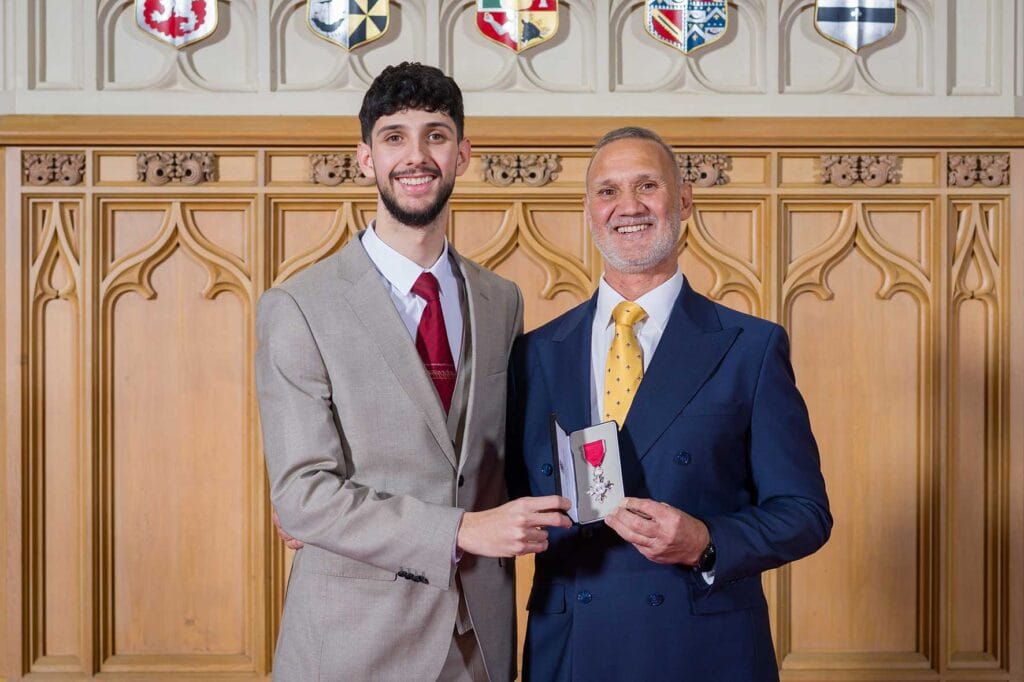
When Gamiel Yafai MBE stood in Windsor Castle to receive his honour from King Charles, the moment carried significance beyond personal recognition. For the Milton Keynes business leader, it signalled that inclusive leadership has moved firmly into the national conversation.
“Standing in Windsor Castle was humbling,” said Gamiel. “But more than personal pride, it felt like validation that the work of making workplaces truly inclusive matters at the highest level. Milton Keynes is a city built on diversity, and that moment felt like recognition of what’s possible when you believe in people.”
The MBE reflects twenty-five years of sustained work through Diversity Marketplace, the consultancy he founded to strengthen workplace culture and leadership capability. Gamiel believes the award acknowledges consistency rather than headlines. “It was recognition for the unglamorous work of changing cultures and challenging assumptions,” he said. “Not just the big moments, but every organisation we helped move from policy to practice.”
In a fast-growing economy such as Milton Keynes, where businesses compete fiercely for skilled talent, that work carries commercial weight. According to Gamiel, inclusion is not an abstract value but a performance strategy. “It leads to better decisions, stronger teams and healthier bottom lines,” he said. “When people feel genuinely included, they bring their creativity, insight and networks. Inclusion isn’t a cost; it’s an investment with a measurable return.”
Research frequently cited in boardrooms suggests diverse teams can outperform their peers by up to 35 per cent. However, Gamiel argues that statistics alone do not change behaviour. “Data opens the door,” he said. “What closes the conversation is linking inclusion to talent shortages, retention, customer relevance and innovation.” In practice, that means auditing gaps, addressing behavioural blind spots and building a measurable roadmap owned at board level.
He believes many firms still fall into predictable traps. “The most common mistake is treating diversity as a project rather than a way of doing business,” he said. “Launching initiatives and awareness days, then wondering why nothing changes.” Equally concerning, he adds, is assuming progress without measurement. “If you cannot monitor and manage it, you cannot improve it.”
The journey to Windsor Castle began far from Buckinghamshire. Growing up between Birmingham and Yemen, Gamiel often felt caught between cultures. “Spending one minute and five seconds speaking to the King would have seemed extraordinary,” he reflected. “But every experience of feeling like an outsider wasn’t an obstacle — it was preparation.”
Now recognised nationally as Gamiel Yafai MBE, he believes the honour brings a greater responsibility to influence how leadership is practised in Milton Keynes and beyond. His message to business leaders is unequivocal. “Listen — really listen — to the people least likely to speak up,” he said. “Then act visibly on what you hear. That single act of courageous listening can shift a culture more powerfully than any policy.”
For a city defined by growth and ambition, his argument is difficult to ignore: inclusive leadership is not a moral accessory. It is a competitive advantage.