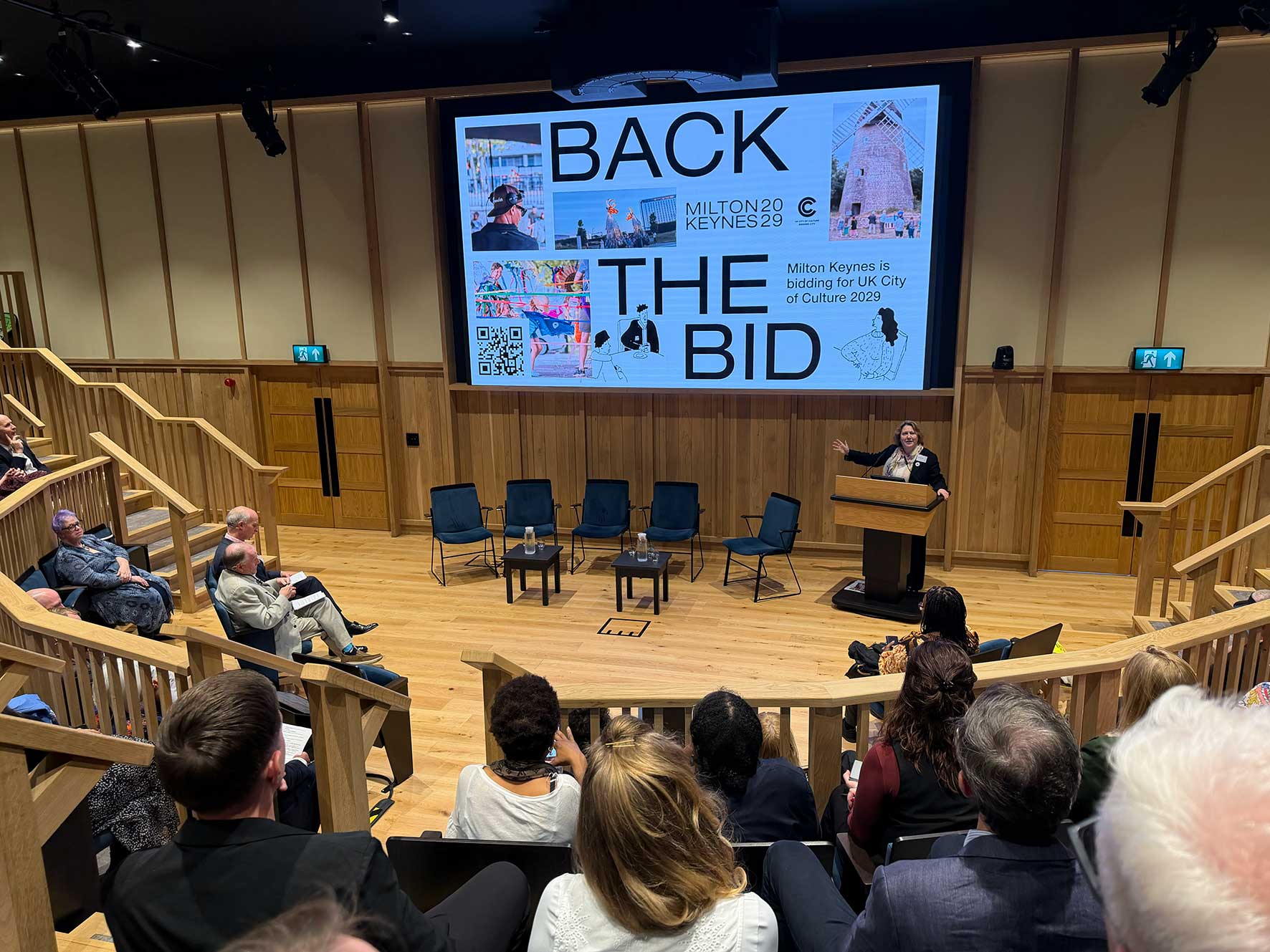
Milton Keynes’ bid to become UK City of Culture 2029 could help reshape perceptions of the city, attract investment and create long-term economic benefits, business leaders were told at the Business Meets Culture event at Bletchley Park.
Speakers involved in successful City of Culture campaigns in Hull, Coventry and Bradford argued that culture should be viewed not simply as an arts programme but as a catalyst for economic growth, regeneration and civic pride.
Milton Keynes is among the locations longlisted for UK City of Culture 2029, with organisers now seeking support from businesses alongside residents, community groups and cultural organisations.
Andrew Dixon, a cultural strategist who has worked on successful bids including Hull 2017 and Coventry 2021, said the competition was ultimately about creating change rather than celebrating cultural credentials alone.
“This isn’t a beauty contest,” he said. “It’s about the city that can use culture to make a difference and to make a change.”
Andrew said successful bids had the potential to alter how places were viewed by residents, visitors and investors long after the title year had ended.
“A successful delivery of City of Culture, or a successful bid, can really change a place,” he said.
Drawing on examples from Hull, Coventry and Bradford, Andrew argued that City of Culture programmes had helped attract investment, boost visitor numbers and build confidence within communities.
John Cove, chair of Destination Milton Keynes, described the bid as a city-wide effort and encouraged businesses to become active participants rather than passive supporters.
“This is a recruitment meeting for you all to be on Team MK,” he told delegates.
John urged organisations to promote the bid through their own networks and to contribute ideas, support and expertise as the campaign develops.
Graham Sweeney, managing partner of Yorkshire law firm Schofield Sweeney and a supporter of Bradford 2025, said businesses should view City of Culture as an economic opportunity as well as a cultural one.
“It’s not just about culture. There are business benefits that flow from this,” he said.
“A re-energised city attracts business. It attracts investment.”
Graham said Bradford’s experience had shown how a City of Culture programme could change perceptions of a place while creating opportunities for businesses, communities and residents alike.
Shanaz Gulzar, creative director of Bradford 2025, described City of Culture as a “change project” and said the strongest outcomes came when organisations treated the programme as something they owned rather than something being delivered to them.
She said businesses in Bradford had played an important role in supporting projects, building partnerships and helping create momentum behind the programme.
A recurring theme throughout the evening was that the benefits of a successful bid extend beyond culture itself. Speakers pointed to increased investment, stronger city branding, greater civic pride and new opportunities for businesses as some of the longer-term outcomes seen in previous host cities.
Organisers are expected to continue engaging with businesses as Milton Keynes develops its bid ahead of the next stage of the UK City of Culture 2029 competition. Businesses interested in supporting the campaign can register their interest as the bid team seeks ideas, partnerships and wider backing from across the city.
Businesses interested in supporting the Milton Keynes UK City of Culture 2029 bid can register their interest here: https://tally.so/r/aQY2Wb